3 November 2026, by Roadwise Mobility Uganda
Different Driving Licence Classes in Uganda: A Complete Guide
Discover the different driving licence classes in Uganda, from motorcycles and private cars to trucks, buses and tractors. Learn what each class covers and which category may be suitable for your vehicle.
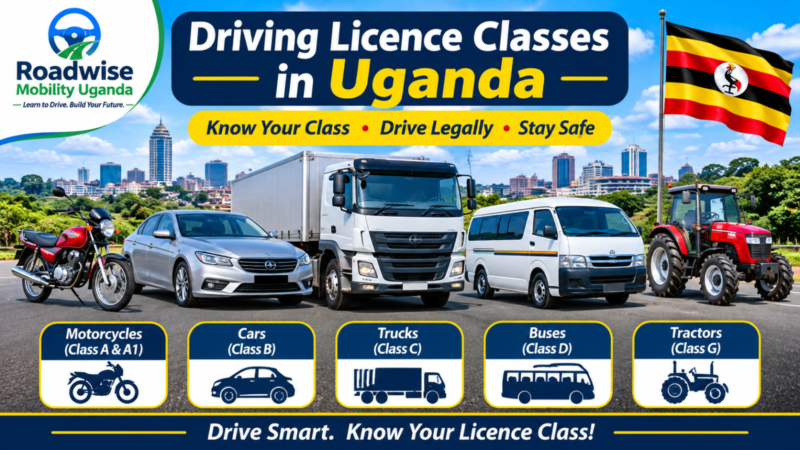
Different Driving Licence Classes in Uganda: A Complete Guide for Drivers
Getting a driving licence in Uganda is an important step towards becoming a responsible road user. However, not every driving licence allows you to operate every type of vehicle. Different licence classes are designed for different vehicles, including motorcycles, private cars, trucks, buses and agricultural machinery.
Understanding the different driving licence classes in Uganda can help you choose the right category when applying for your first licence or extending your existing one.
In this guide, we explain the main driving licence classes, the types of vehicles they cover and why choosing the correct category matters.
What Are Driving Licence Classes?
Driving licence classes are categories that determine the types of motor vehicles a person is authorised to drive.
For example, someone licensed to drive an ordinary private car may not automatically be authorised to operate a heavy truck or passenger bus. They may need to meet additional requirements and obtain the appropriate licence class.
Uganda's driving licence categories include A, A1, B, B1, BE, C1, C1E, C, CE, D1, D1E, D, DE, F and G.
Different Driving Licence Classes in Uganda
- Class A – Motorcycles
Class A covers motorcycles with an engine capacity exceeding 125cc and power exceeding 11kW.
This category is relevant to riders operating larger motorcycles. Anyone intending to ride a motorcycle should check that their licence covers the correct category.
- Class A1 – Light Motorcycles
Class A1 covers light motorcycles with an engine capacity not exceeding 125cc and power not exceeding 11kW.
It is commonly relevant to people who ride smaller motorcycles for personal transport or other everyday activities.
- Class B – Motor Vehicles
Class B covers motor vehicles with a permissible maximum mass not exceeding 3,500kg and up to eight passenger seats in addition to the driver's seat.
Examples include:
- Saloon cars
- Hatchbacks
- Station wagons
- SUVs
- Many ordinary private cars
This is one of the common categories for people who want to drive private motor vehicles.
- Class B1 – Tricycles and Quadricycles
Class B1 covers tricycles and quadricycles.
These are three-wheeled and four-wheeled motor vehicles that fall within the legal definition of this category. It is important to check the vehicle's classification rather than assuming that every three- or four-wheeled vehicle belongs to B1.
- Class BE – Vehicles with Trailers
Class BE covers certain Class B motor vehicles when coupled to larger trailers that fall outside the trailer limits permitted under ordinary Class B.
This category is relevant to drivers who need to operate a qualifying car or light vehicle with a heavier trailer.
- Class C1 – Medium Goods Vehicles
Class C1 covers goods or other qualifying motor vehicles with a permissible maximum mass exceeding 3,500kg but not exceeding 7,500kg.
It is relevant to drivers who operate medium-sized trucks and other vehicles within this weight range.
- Class C1E – C1 Vehicles with Trailers
Class C1E covers qualifying C1 vehicles coupled to trailers exceeding 750kg, subject to the applicable weight and combination limits.
Drivers who operate medium-sized vehicles with heavier trailers may need this category.
- Class C – Heavy Goods Vehicles
Class C covers qualifying motor vehicles with a permissible maximum mass exceeding 3,500kg, excluding vehicles classified under the passenger categories.
Examples may include:
- Heavy delivery trucks
- Large goods vehicles
- Heavy commercial trucks
The vehicle's legal classification and weight determine whether it falls under Class C.
- Class CE – Heavy Goods Vehicles with Trailers
Class CE covers qualifying Class C vehicles coupled to trailers exceeding 750kg.
It is relevant to drivers who operate heavy trucks with larger trailers, including certain articulated vehicle combinations.
- Class D1 – Minibuses
Class D1 covers passenger vehicles designed to carry more than eight passengers in addition to the driver, but not more than sixteen passengers, subject to the applicable vehicle requirements.
It is relevant to drivers operating qualifying minibuses and smaller passenger transport vehicles.
- Class D1E – Minibuses with Trailers
Class D1E covers qualifying D1 passenger vehicles coupled to trailers exceeding 750kg, subject to the applicable combination limits.
The trailer in this category is not intended for carrying passengers.
- Class D – Passenger Vehicles
Class D covers qualifying passenger-carrying motor vehicles with more than eight passenger seats in addition to the driver's seat, within the limits set by the law.
It is relevant to drivers operating larger passenger vehicles, depending on their seating capacity and vehicle classification.
- Class DE – Larger Passenger Vehicles with Trailers
Class DE covers qualifying Class D passenger vehicles with trailers exceeding 750kg.
The category is relevant to drivers who operate larger passenger vehicles with qualifying trailers.
- Class F – Special Machinery
Class F covers special machinery and certain engineering or earth-moving equipment.
Examples include:
- Bulldozers
- Graders
- Compactors
- Other qualifying special machinery
The appropriate underlying vehicle category and requirements must be considered when applying for this class.
- Class G – Agricultural Tractors
Class G covers agricultural tractors.
It is relevant to people who operate tractors for farming and other agricultural activities.
Why Is It Important to Have the Correct Driving Licence Class?
Driving with the correct licence category is important because it ensures that you are authorised to operate the type of vehicle you are using.
Here are some reasons to understand your licence class:
- Legal compliance: You should hold the appropriate licence category for the vehicle you drive.
- Road safety: Different vehicles require different driving skills and knowledge.
- Employment opportunities: Some driving jobs require specific categories, particularly for trucks, buses and machinery.
- Class extension planning: Understanding the categories helps you identify which additional class you may need.
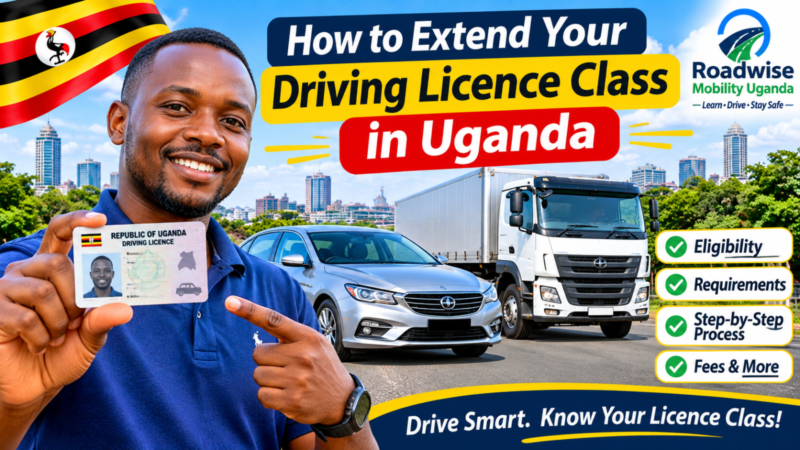
What Is Driving Licence Class Extension in Uganda?
A driving licence class extension is the process of adding another vehicle category to an existing driving licence.
For example, a driver who already holds Class B may wish to obtain an additional category for operating a qualifying goods vehicle or passenger vehicle.
However, not everyone automatically qualifies for every category. Age, existing licence class, driving experience, training and other requirements may apply.
Before starting the process, check the current requirements with the Uganda Driver Licensing System (UDLS).
Where Can You Confirm the Official Driving Licence Requirements?
Driving licence requirements, procedures and fees may change. It is always advisable to confirm the latest information through official sources before making an application.
Visit the Uganda Driver Licensing System website:
https://udls.co.ug/
You can also check the official information about adding classes to your driving licence:
https://udls.co.ug/add-classes-to-your-licence/
Frequently Asked Questions About Driving Licence Classes in Uganda
- Which driving licence class is used for ordinary private cars in Uganda?
Class B generally covers ordinary private motor vehicles that meet the applicable weight and seating limits.
- Which driving licence class covers motorcycles?
Class A covers larger motorcycles, while Class A1 covers light motorcycles within the specified engine capacity and power limits.
- Which class is required for heavy trucks?
Class C generally covers qualifying heavy goods vehicles. Class C1 covers vehicles in the medium-weight range.
- Which driving licence class covers minibuses?
Class D1 covers qualifying minibuses carrying more than eight and up to sixteen passengers in addition to the driver.
- Can I add another driving licence class to my existing licence?
Yes. You may apply for a class extension if you meet the requirements for the category you want to add. The requirements depend on the class.
- Where can I check the requirements for a class extension?
You can visit the official UDLS website at https://udls.co.ug/ for current requirements and procedures.
Final Thoughts
Understanding the different driving licence classes in Uganda can help you make informed decisions when applying for a driving licence or planning to extend your existing one.
Whether you want to ride a motorcycle, drive a private car, operate a truck, transport passengers or use agricultural machinery, make sure you understand the category that applies to your vehicle.
At Roadwise Mobility Uganda, we share driving information, licence application and class extension guidance, and practical road safety tips to help motorists improve their knowledge.
Need guidance on driving licence class extension? Contact Roadwise Mobility Uganda through WhatsApp.
Disclaimer: This article is for general educational purposes. Roadwise Mobility Uganda is an independent information and assistance service, not a government licensing authority. Always confirm the latest requirements with UDLS. Licence applications and approvals are handled by the relevant authorities.