4 November 2026, by Roadwise Mobility Uganda
10 Important Safety Tips for Driving in the Rain in Uganda
Rain can make driving in Uganda challenging. Discover 10 important safety tips to help you handle wet roads, improve visibility, avoid skidding and protect yourself and other road users.
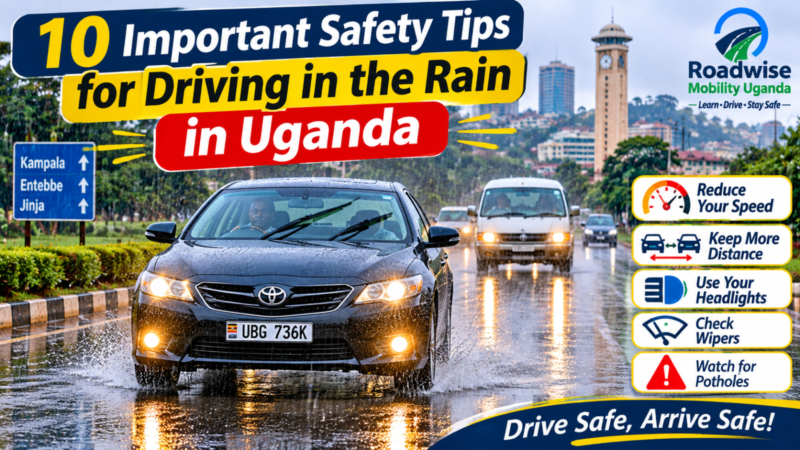
10 Important Safety Tips for Driving in the Rain in Uganda
Driving in the rain can be challenging, even for experienced motorists. Roads that are normally easy to use can become slippery, visibility may reduce, and stopping distances can increase.
In Uganda, sudden rain showers can catch drivers on busy roads, highways and rural routes. Water may collect in potholes, drainage channels can overflow, and pedestrians or motorcyclists may become harder to see.
Whether you drive around Kampala or travel to another part of the country, knowing how to handle wet roads can help you avoid accidents and reach your destination safely.
Here are ten important safety tips every driver should understand before driving in rainy weather.
- Reduce Your Speed
One of the most important things to do when driving in the rain is reduce your speed.
Rainwater makes the road surface slippery, especially when it mixes with dust, oil and other substances. Your tyres may struggle to maintain a good grip, making it harder to control the vehicle.
Avoid driving at the same speed you would use on a dry road. Slow down gradually and adjust your speed according to the amount of rain, road condition and visibility.
Remember, arriving safely is more important than arriving quickly.
- Increase Your Following Distance
During rainy weather, your vehicle may take longer to stop because the tyres have less grip on the road.
For this reason, leave more space between your vehicle and the one ahead of you.
Avoid following other vehicles too closely, particularly large trucks and buses. They can splash water onto your windscreen and temporarily block your view.
A larger following distance gives you more time to react if the vehicle in front suddenly slows down or stops.
- Switch On Your Headlights
Rain can make it difficult to see other road users, particularly during heavy showers, early mornings and late afternoons.
Switch on your dipped headlights when visibility is reduced. This helps you see the road and makes your vehicle easier for other drivers to notice.
Avoid using full-beam headlights in heavy rain or mist because the reflected light can make visibility worse.
Also, make sure your headlights, brake lights and indicators are working properly.
- Check Your Windscreen Wipers
Your windscreen wipers play an important role in keeping your vision clear during rainfall.
Before starting a journey, check whether the wipers are working properly. Worn-out or damaged blades may leave water streaks across the windscreen.
If the rain becomes heavy, make sure the wipers are operating at a suitable speed.
It is also important to keep your windscreen clean, both inside and outside. A dirty windscreen can make it harder to see through rain and approaching headlights.
- Avoid Sudden Braking and Sharp Steering
Wet roads require smooth driving.
Suddenly pressing the brakes, accelerating too quickly or turning the steering wheel sharply can cause your tyres to lose grip.
Try to anticipate traffic conditions and slow down before reaching junctions, bends and other potential hazards.
When you need to stop, apply the brakes smoothly and progressively.
Smooth movements help you maintain better control of your vehicle.
- Watch Out for Potholes and Flooded Roads
Rain can hide potholes, damaged road surfaces and other obstacles.
This is a particular concern on roads where drainage is poor or where water collects after heavy rainfall.
Avoid driving through deep or fast-moving water when you cannot judge its depth or the condition of the road underneath.
If you encounter a flooded section, look for a safer alternative route where possible. Never assume that a road is safe simply because another vehicle has passed through it.
Water can also damage your vehicle or cause it to lose control.
- Be Careful When Driving Around Motorcycles and Pedestrians
Rainy weather can make roads more dangerous for pedestrians, cyclists and motorcycle riders.
Some pedestrians may carry umbrellas that reduce their view of approaching traffic. Motorcyclists may also struggle with slippery road surfaces and reduced visibility.
Give other road users enough space and slow down when approaching busy pedestrian areas, markets, schools and roadside trading centres.
Be especially careful near zebra crossings and places where people may suddenly enter the road.
- Keep Your Tyres in Good Condition
Your tyres are the only parts of your vehicle that make direct contact with the road.
When driving in the rain, their condition becomes even more important.
Check your tyres regularly for:
- Adequate tread depth.
- Correct tyre pressure.
- Cuts, cracks or visible damage.
- Uneven wear.
Worn tyres are less effective at moving water away from the contact area between the tyre and the road. This increases the risk of losing grip.
If your tyres are badly worn, have them inspected and replaced when necessary.
- Know What to Do If Your Vehicle Aquaplanes
Aquaplaning happens when a layer of water builds up between your tyres and the road surface, causing the tyres to lose contact with the road.
When this happens, you may temporarily lose steering control.
If you suspect your vehicle is aquaplaning:
- Stay calm and avoid sudden movements.
- Ease off the accelerator.
- Keep the steering wheel steady.
- Avoid sudden or harsh braking.
- Allow the tyres time to regain contact with the road.
The best way to reduce the risk of aquaplaning is to drive at a suitable speed, maintain good tyres and avoid standing water.
- Stop Somewhere Safe if Visibility Becomes Too Poor
Sometimes the rain becomes so heavy that continuing to drive is unsafe.
If you can no longer see the road clearly, consider stopping until conditions improve.
Look for a safe parking area away from moving traffic. Avoid stopping in the middle of the road, on a blind bend or in a dangerous roadside position.
If you cannot find a safe place immediately, reduce your speed and continue carefully until you reach one.
Do not risk your life just to reach your destination on time.
What Should You Check Before Driving in the Rain?
Before leaving home, take a few minutes to inspect important parts of your vehicle.
Here is a simple checklist:
- Check your tyres and tyre pressure.
- Test your windscreen wipers.
- Make sure headlights and brake lights work.
- Check your brakes.
- Clean your windscreen and mirrors.
- Make sure your demister or air-conditioning system works.
- Check that your fuel level is sufficient for the journey.
A few simple checks can help you prepare for unexpected weather conditions.
Frequently Asked Questions About Driving in the Rain
- Is it safe to drive during heavy rain in Uganda?
It depends on the road and weather conditions. If visibility is extremely poor or roads are flooded, it is safer to stop somewhere appropriate and wait for conditions to improve.
- Why should drivers reduce speed when it rains?
Wet roads reduce tyre grip and can increase stopping distances. Reducing speed gives you more time to react and helps maintain control of the vehicle.
- Should I use full-beam headlights during heavy rain?
Generally, no. Use dipped headlights. Full beams can reflect off rain or mist and make it harder to see.
- What is aquaplaning?
Aquaplaning occurs when water builds up between your tyres and the road, causing a temporary loss of grip and steering control.
- How can I prevent my car from skidding on wet roads?
Drive at a suitable speed, maintain good tyres, increase your following distance and avoid sudden braking, acceleration or steering.
- Should I drive through flooded roads?
Avoid driving through floodwater when you cannot establish its depth, current or road condition. Find another route if possible.
Final Thoughts
Driving in the rain requires patience, concentration and good judgement. Even a familiar road can become dangerous when visibility is poor or the surface is slippery.
Always reduce your speed, maintain a safe following distance, check your tyres and avoid unnecessary risks.
Remember that good driving is not only about knowing how to operate a vehicle. It is also about recognising danger and making the right decisions before an accident happens.
At Roadwise Mobility Uganda, we share practical driving tips, road safety information and driving-related guidance to help motorists become more informed and responsible road users.
For driving-related enquiries, contact us on WhatsApp.
Disclaimer: This article is for general educational purposes. Always follow applicable traffic laws and adjust your driving to the actual road and weather conditions.